Our agrifood system is responsible for up to 37% of all greenhouse gas emissions and is a major factor in biodiversity loss. Can we feed ourselves without devastating impacts on the planet’s life support systems?
Chaired by Dr Jordan Raine (Former Environment Editor at The Conversation, XR Scientist), with a panel of international experts including:
Dr Marco Bertaglia, Scientific Officer in Agroecology, Joint Research Centre, Italy (on sabbatical) and XR Scientist
Dr Lynn Dicks, Ecology Lecturer, Department of Zoology, University of Cambridge
Jyoti Fernandes, Policy lead Land Workers Alliance UK, European Coordination Via Campesina
Prof Alain Peeters, Secretary of Agroecology Europe
The apple guild is in another location and may be combined here later
For those who aren’t familiar a fruit tree guild is a permaculture method of planting a fruit tree in combination with other plants that will grow together to create a mini ecosystem around the tree. While there hasn’t been a lot of scientific study of tree guilds they do show a lot of potential. Research has shown that intercropping (planting more than one species together) can be a valuable tool for increasing yields and crop health. Plus, tree guilds, in stark contrast with monoculture orchards are space saving and great for wildlife.
Selecting Plants
The first step is to research the type of tree you’d like to start with. For an example I’ll be talking about a peach tree guild but you can use any type of tree whether it’s an existing tree on your property or one you’d like to plant this spring. The important part is that you do some research into the tree such as its growth pattern and mature size. Also consider what soil types it prefers, where you’ll be planting it, and if it’s prone to any disease or pest problems.
Based on your research you’ll select companion plants. Tree guilds are typically made up of six categories: suppressors, attractors, repellers, mulchers, accumulators, and fixers though there are variations and there’s no rule that you have to plant all of these or can’t plant more than one species from each category. If you see a need you can even make up your own category!
If you’re planting a particularly tall tree or working with a mature tree you can include perennial shrubs on your plant list. Just be careful with smaller, newer trees that they don’t compete for light.
Suppressors
These are plants that suppress weed growth through there own growth habits. Good examples include vining winter squash which shades out weeds, mint or buckwheat which outcompete weeds through rapid, thick growth, or strawberries, pennyroyal, or thyme whose vines form a thick mat of ground cover. For a peach tree guild I would choose strawberries partially because I enjoy eating them but also because they’re an excellent suppressor and their early flowers draw in pollinators.
Attractors
Mona’s Orange Cosmos
Attractors are plants that attract pollinators and other beneficial insect to the tree. Examples include yarrow, buckwheat, butterfly weed, and mustards. Many other species can also be used but it’s important to find something that will work well for your chosen tree. For a peach tree guild I would choose to plant cosmos as they attract trichogramma wasps which are a helpful beneficial insect and a natural enemy of oriental fruit moths which can severely damage peach trees.
Repellers
These plants job is to repel unwanted pests from feeding on your fruit tree. Lemon grass, marigolds, lemon balm, and almost any allium like garlic, chives, or perennial onions are all commonly used to repel pests. Knowing your specific tree’s common pest issues will allow you to best select a variety. For the peach tree example I’d use garlic as there’s some evidence that planting garlic around peach trees helps repel peach tree borers.
Fixers
Red Clover
Fixers refers to plants that are nitrogen fixing meaning that they add nitrogen to the soil as they grow. Great examples of these plants include white clover, red clover, beans, alfalfa, lupine, and peas. For a peach tree guild I would choose red clover. It attracts pollinators, beneficial insects including trichogramma wasps, and makes a wonderful tea.
Mulchers
Probably the most commonly used mulcher plant in permaculture designs is comfrey. It’s hardy, perennial, easy to care for, and its leaves do in fact make excellent mulch. Hostas have the same benefits. You can also use annual cover crops like buckwheat that winter kill and provide good mulch. Buckwheat also has the added benefit of self seeding. For this example comfrey will be used because it doubles as an accumulator.
Accumulators
These are plants that “mine” nutrients from deep in the soil and bring the to the surface where other plants will be able to access them. Good examples include alfalfa, comfrey, borage, and chicory. For more ideas look at deep rooted perennial plants. For my peach tree guild I would opt for chicory as it offers medicinal benefits for both humans and livestock.
Once you’ve got all your plants you can begin planting. Obviously it’s easiest to start with the tree and work your way out. You should consider how much space it will need and shade it will create as it grows when selecting locations for other perennials.
Utilizing this permaculture method can help you make the most out of your orchard space by incorporating other edible, medicinal, or flowering crops into your design and keeping your trees healthy and productive. It can also make your space more habitable for beneficial wildlife like birds, pollinators, and beneficial insects which lose habitat when space between trees is mowed. Lastly it may even help reduce erosion when compared to traditional orchard set ups. What’s there to lose?
Events and activities on this calendar are only available to members of the cooperative. No drop-ins please. Contact Wayne at (707) 347-9465 if you are interested in joining and I will bring the question to the group when we meet next. Please be patient.
This is a thought experiment on fire inspired by the Kincade fire, discussions with poet laureate Maya Khosla and a trip we just took to Ettawa Springs a charming yet disheveled turn of the century resort in the forested hills near Loch Lomond in Lake County.
Imagine a new day for life on earth -- Living in communitywith many thousands on ten thousand acres of forest and wilderness land. Over time and generations we would restore and grow and tend and improve habitat, sinking carbon and then the fire comes -- inevitable -- all your compassionate work thought lost.
If your village were nomadic you would move on, or perhaps if you were a caretaker society of the future you would set in motion restoration of the burn, hastening its regeneration using technologies and infrastructure and propagation, and then let wilding take its course. Your work, done for the moment.
Life in your village, if your structures were hardened and survived the fire would be a shadow of what it was, transformed by fire, dwellers having completely different purpose and its culture transformedin relationship to the land -- but burn it will, burn it must, again and again over eons. We would live and return to the landscape for ages, as caretakers, and carry that knowledge of fire in our bones, ancient memories we pass to our children in stories. Nature knows the way and fire will always be part of nature.
There is of course a dominate and modern story. Private property estates on the hill and resorts in wild lands and private mansions nestled in tracts of wilderness with vineyard and affluence. As picturesque as these modern stories may be, they are out of step with the original human in nature story. I do not think they can ever be reconciled with fire, try as they will.
PG&E is a criminal syndicate run amok in this modern story, but they did not make this story. So although we must hold them to account for their crimes, this will not repair our modern story and our relationship to fire. It will just be a lawnmower next time.
This is two years old and yet very relevant. Anthony Bourdain, and other celebrity chefs, help solve the problem of food waste and hunger as one-third of all food grown for human consumption ends up in the garbage. Herein lay answers to the global food crisis that on its way whether we like it or not. Although governments are doing absolutely nothing at scale to fend off this disaster this film has good answers to the problem -- deliciously.
I do not have a youtube link this time but rather a link to the CBS (Canadian Public Broadcast) channel that runs the show. Good luck may need cookies.
I am not a smoker but not a teetotaler, so here's the article. It is interesting to note that Wendell Berry was a tobacco farmer as his family before him and believed deeply in sustainability and the nobility of good old fashioned values held by small family farmers. This article chronicles the demise of these farmer.
You might be surprised to learn that well into the 1990s, tobacco production was a hidden hold out of profitable small-scale family operated agriculture, especially in Appalachia and the Piedmont plateau. In 1987, the average tobacco farm was just 4.6 acres, and run mostly with family labor.
That of course changed with our state policy mantra of "Get Big or Get Out."
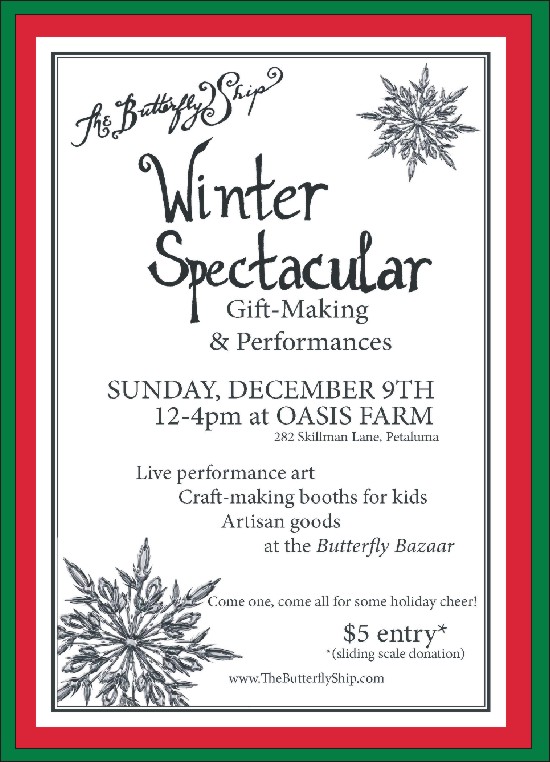
I am very excited with this event. It brings me back to my roots when at Jungle Vibes Toys we did arts and crafts for kids on the riverside deck. I will be personally staffing a booth making paper kaleidoscopes, yarn craft and leaf prints. All the paints and supplies are provided. Kids can make art cards and gifts for the holidays. So sweet....and I don't have to tell you how sweet and talented are the crew of Butterfly Ship
The science here is funded by Gates so OK I guess and it will ultimate involve Genetic engineering. I am not of the persuasion to think GMO baaaaad! I just think it's science. Commercializing it and releasing it on the world helter skelter has turned out bad of course. Herein lies my caution. Gate is all about increasing yield in crops in a system that has already proven to be unsustainable because of depletion of soils
As human population growth fuels the need for increased crop yields, researchers look to engineer plants that perform photosynthesis more efficiently
If you go to the link for the article that crop they are standing amid appears to be tobacco. Hum, there's money in it but I am not sure the planet need increased yields of that particular vegetable.
Of course, plant researchers have been thinking about using improved photosynthesis to increase crop yields for decades, but recent leaps in computer modelling and genetic engineering techniques have started to bring that goal within reach. In 2011, and again in 2015, a group of scientists came together to publish an article that called for research into the improvement of photosynthesis as a means for meeting the increased yield demands of coming decades, as well as laying out potential strategies. One of the strategies the group highlighted was the possibility of engineering plants to use near infrared light.
While this tech could be used to allow inter cropping food crops under canopies which certainly has promise if it can be done safely, its primary use will be in field crops to get the immediate short term gain in yield while continuing other destructive practises.
Re-engineering shade loving plants to efficiently photosynthesize under canopies of trees in deep layers could turn the forests into carbon sucking monsters which of course would accelerate drawdown and thus be of good use, this may not be the ultimate planet we want. I can imagine a kind of sci-fi out of control jungle and I kind of like the one we have so how do we contain the genetics so that it can be normalized in the future. Also who will live in these new carbon sucking forests? It is not a niche that has yet been adapted to so you would expect die offs and unwitting population explosions to happen. Hum, I think it should stay as science until understood better.
This undark site is really cool on their about us it explains the name --
EDITORIAL MISSION
The name Undark arises from a murky, century-old mingling of science and commerce — one that resulted in a radium-based industrial and consumer product, called Undark, that was both awe-inspiring and, as scientists would only later prove, toxic and deadly. We appropriate the name as a signal to readers that our magazine will explore science not just as a “gee-whiz” phenomenon, but as a frequently wondrous, sometimes contentious, and occasionally troubling byproduct of human culture.
As such, the intersection of science and society — the place where science is articulated in our politics and our economics; or where it is made potent and real in our everyday lives — is a fundamental part of our mission at Undark. As journalists, we recognize that science can often be politically, economically and ethically fraught, even as it captures the imagination and showcases the astonishing scope of human endeavor. Undark will therefore aim to explore science in both light and shadow, and to bring that exploration to a broad, international audience.
Undark is not interested in “science communication” or related euphemisms, but in true journalistic coverage of the sciences.
FUNDING
Undark is a non-profit, editorially independent digital magazine exploring the intersection of science and society. It is published with generous funding from the John S. and James L. Knight Foundation, through its Knight Science Journalism Fellowship Program in Cambridge, Massachusetts.