We are your neighborhood farmer

We are your neighborhood farmers -- Get in touch at 707 347-9465 or wmorgenthaler@gmail.com
Showing posts with label flora. Show all posts

Monday, June 18, 2018

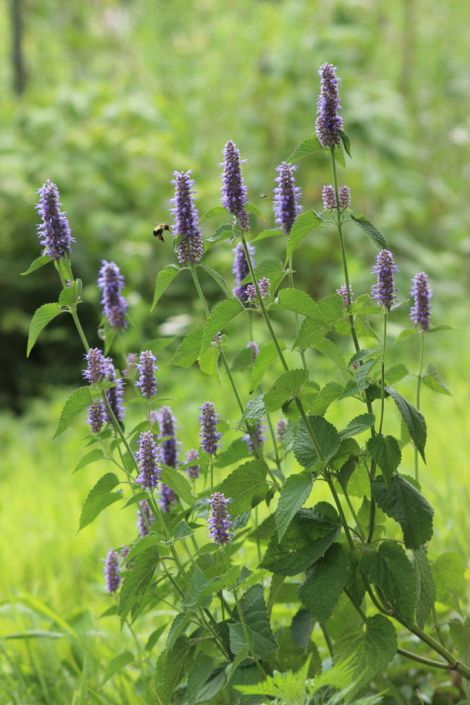
Agastache foeniculum Anise Hyssop | Prairie Moon Nursery

Agastache foeniculum Anise Hyssop | Prairie Moon Nursery:

Agastache foeniculum

"Anise Hyssop has very showy flowers, fragrant foliage and seems to be of little interest to deer. It self-seeds readily and often blooms the first year. New seedlings are hardy and can be transplanted easily. It's a bee, hummingbird, and butterfly magnet and makes an excellent addition to herb gardens, borders, perennial gardens, and prairies. When the leaves of the Anise Hyssop are crushed they smell like licorice and have been used to make tea and cold remedies.  Other common names in use: Lavender Hyssop or Blue Giant Hyssop" It is not particularly frost sensitive but may have some die back.  It is looks ratty you can cut them back strongly and they will bust out in the spring again.

difficult to germinate, cold stratify 30 days, surface sow and bottom water

'via Blog this'

Thursday, February 22, 2018

Common Rush, Juncus patens

Common Rush, Juncus patens:


 "Juncus patens is a species of grass-like plant known by the common name Common Rush. It is native to the western United States from Washington to California, and its range may extend into Mexico. Within California it is found primarily along the coastal and coastal mountain, in marshes and other wet areas. However, it can also be tolerant of summer drought and garden conditions. It is a perennial herb forming narrow, erect bunches of stems arising from a central clump. The stems are thin, gray-green, often somewhat waxy, and grooved, and grow 30 to 90 centimeters in maximum height. The leaves have no blades; they appear as brown sheaths around the base of the stems. The flower cluster sprouts from the side of the stem rather than its tip. It holds many flowers, each of which has short, narrow, pointed petals and six stamens. The fruit is a spherical red or brown capsule which fills and bulges from the dried flower remnants when mature. It is popular in somewhat formal gardens, water gardens, and restoration projects. There are several available cultivars including 'Carman's Grey', 'Elk blue' and 'Occidental Blue'.

This plant is tough and easy to grow. It is happy in areas that are damp year-round, but also looks good and healthy in fairly dry soils with only minimal irrigation in summer."


'via Blog this'

California Buckwheat, Eriogonum fasciculatum

California Buckwheat, Eriogonum fasciculatum:


 "Known by the common name California buckwheat. This common shrub is native to the southwestern United States and northwestern Mexico, where it grows on scrubby slopes and in chaparral and dry washes in a number of habitats. It is variable in appearance, forming a patchy, compact bramble or a spreading bush approaching two meters in height and three across. The leaves grow in clusters at nodes along the branches and are leathery, woolly on the undersides, and rolled under along the edges. Flowers appear in dense, frilly clusters which may be anywhere from a few millimeters to 15 centimeters wide. Each individual flower is pink and white and only a few millimeters across. This plant is particularly attractive to honey bees and is a good source of nectar over many months in drier areas.

There are four recognized varieties of California Buckwheat: 1. Eriogonum fasciculatum var. foliolosum or Leafy California Buckwheat, a brighter green variety which grows primarily on the coast and western side of the coastal mountain ranges, and is often carried in nurseries, 2. Eriogonum fasciculatum var. polifolium, a gray variety which grows primarily in the desert regions and through the coastal foothills, and is sometimes available in nurseries, 3. Eriogonum fasciculatum var. fasciculatum, or Coastal California Buckwheat, which grows most closely to the coast, and 4. Eriogonum fasciculatum var. flavoviride, or Sonoran Desert California Buckwheat, which grows primarily in the Sonoran Desert and desert mountains.

California Buckwheats are tough and easy to grow, even in very dry conditions. Plant in a well draining sunny site. It shouldn't need supplemental water after established, but it will tolerate occasional summer water better than most extremely drought tolerant California natives. Form is variable, ranging from often open and upright in the foothills, to often dense and mounding closer to the coast. It produces profuse pink to white and cream-colored flowers as early as March that dry to a pretty red rust color as the soil dries. It sheds its dried flowers and a significant portion of its small blade-like leaves each dry season, and is an important plant for creating natural mulch. California Buckwheat is a keystone species for sagebrush scrub ecosystems, and a great choice for wildlife and butterfly gardens. Low growing forms of both Leafy Green Buckwheat and Interior California Buckwheat can be found in nurseries to use as spreading ground covers."


'via Blog this'

Cardinal Flower, Lobelia cardinalis

Cardinal Flower, Lobelia cardinalis:


"Cardinal Flower is an evergreen species native to the Americas, from southeastern Canada through the eastern and southwestern United States, Mexico and Central America to northern Colombia. It tends to grow in very wet areas like stream bottoms, bogs and seeps. It grows to about a meter tall (when in flower) and has bright red flowers. Hummingbirds love it. Cardinal flower is often cultivated for ornamental purposes and has also been used for medicinal purposes.

The plant is very alkaloid and is considered toxic"


'via Blog this'

Lysimachia nummularia - Creeping Jenny Perennial

Plant Profile for Lysimachia nummularia - Creeping Jenny Perennial: shaddy areas perhaps at pond edges Ther is a golden version that is good for full sun

Lysimachia nummularia

"Creeping Jenny is a vigorous, spreading groundcover plant that can be very useful in moist, shady situations. Plants form a low mat of bright green rounded leaves, bearing bright golden-yellow flowers from late spring into the summer. Excellent in pots and tubs, or cascading over walls. Too vigorous for the rock garden. Since the stems root into the ground wherever they touch, this plant is easily increased by simply moving new plantlets in spring or fall. Best as a lawn substitute, otherwise this can escape into lawns or borders. Semi-evergreen in mild winter regions."


'via Blog this'

Friday, February 16, 2018

Permaculture hedgerow plan process seeking input

First a little definition.  A hedgerow is not a hedge, it is a habitat and in our case we are constructing a 300 foot band of shrubs, ground covers, trees, vines and thickets with a mix of nearly 90 evergreen and deciduous varieties.  This will vary in width from only 10 feet to 50 feet and traverse the property from the northwest (top) side, down the west fence line to the barn and then diagonally eastward down slope on the water course to the pond. The landscape will mature into a little wild forest over many year and yet within 3 to 4 will provide substantial protection from prevailing wind and a cooling effect in the hot summer for out fruit trees and garden which have suffered with too much exposure.

Permaculture principles

Most of what we are planting is native but we make exceptions for exotics such as carob, jujubes, Silverberry, Autumn Olive and a Capulin Cherry and much will edible and medicinal.  Some of my favorite standout natives are a cultivar multi-trunk Madrone, Ray Hartman Ceanothus, and a new favorite is the evergreen and flowering Bush Anemone.

Ceanothus likes it dry while Wild Ginger and Yerba Mansa likes shady places with its feet wet.  Fortunately we have such variety on this small 2 and a half acre parcel.  The site is south east facing with an overall slope of 56' or 8.6% overall and slightly bowl shaped which promotes drainage from subsurface water into a perennial seep which we have turned into a pond about midway down the hill.

We are about to begin ordering and planting and I would love help and constructive criticism of the project plan.  I am not an expert but my experience on the property for 7 years has taught me a lot. For further study I have provided resources and will respond to questions.

Or you can just give me a call or come by and I can take you for a walk and talk.

PDF Site Plan of the farm
hyperlinked plant index that links to plant descriptions in the blog or you can page through the blog starting here

Tuesday, February 13, 2018

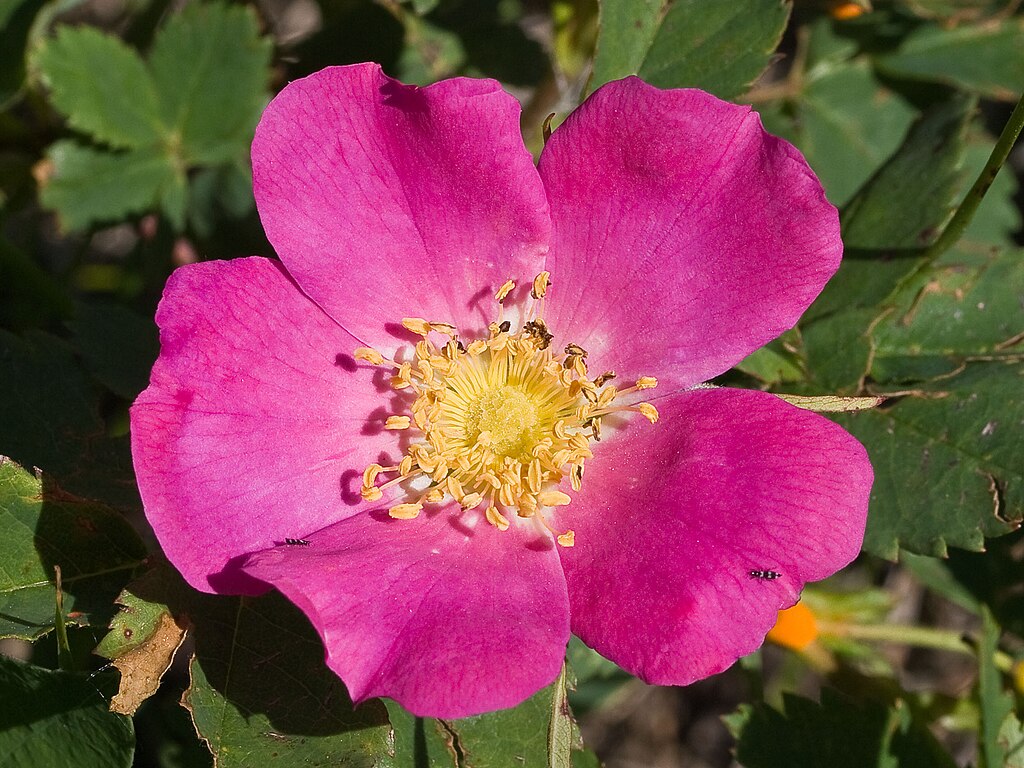
Rosa woodsii - Wikipedia

Rosa woodsii - Wikipedia:

Rosawoodsii.jpg

 "It is native to North America including much of Canada and Alaska and the western and central United States. It grows in a variety of habitat types, including disturbed areas.[1]

In the Sierra Nevadas, it grows to 11,200 feet (3,400 m) in moist, rocky soils in mixed coniferous forest, upper montane forest, and subalpine forest.[2]"


'via Blog this'

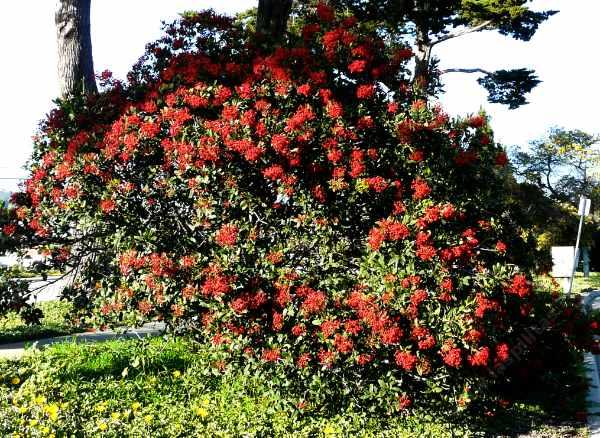
Pittosporum tobira - mock orange

Pittosporum tobira - Wikipedia:  not a native but a dependable everrgreen grower that can get overhead and can grow in sun or part shade and likes heat.  This was on the south side of moms garage and took over most of the building.

Image result for Pittosporum tobira

"Pittosporum tobira is a species of flowering plant in the Pittosporum family known by several common names, including Australian laurel,[1] Japanese pittosporum,[1] mock orange[1] and Japanese cheesewood.[citation needed] It is native to Japan, China, and Korea,[2] but it is used throughout the world as an ornamental plant in landscaping and as cut foliage.


Fruits and seeds in Japan
It is an evergreen shrub which can reach 10 m (33 ft) tall by 3 m (10 ft) broad,[2] and can become treelike. It can also be trimmed into a hedge. The leaves are oval in shape with edges that curl under and measure up to 10 cm (4 in) in length. They are leathery, hairless, and darker and shinier on the upper surfaces. The inflorescence is a cluster of fragrant flowers occurring at the ends of branches. The flower has five white petals each about a centimetre long. The fruit is a hairy, woody capsule about 1 cm wide divided into three valves. Inside are black seeds in a bed of resinous pulp.

The binomial qualifier tobira derives from the Japanese name for the plant.[3]

This shrub is a common, drought-tolerant and fairly hardy landscaping plant. Many cultivars have been developed, including dwarf forms and the popular 'Variegata', which has variegated leaves.[4] It is used for hedges, living privacy screens, and indoor and outdoor planter boxes.[4] The stems, leaves, and dried fruits are used in flower arrangements.[4]"


'via Blog this'
Climbing Penstemon, Keckiella cordifolia

Climbing Penstemon, Keckiella cordifolia:


 "Keckiella cordifolia (formerly Penstemon cordifolius) is a species of flowering shrub in the plantain family known by the common name heartleaf keckiella. It is native to the coast and coastal mountains of southern California and northern Baja California, and it is a resident of chaparral and coastal woodland plant communities. This is a spreading shrub reaching maximum heights in excess of two meters. Its shiny green leaves are oval to heart-shaped, pointed, and edged with small teeth. They are 2 to 6 centimeters long and arranged oppositely on the branches. The shrub produces hairy, hairy flower clusters of many flowers each. The flower is somewhat tubular with a wide open mouth. It is fuzzy on the external surface and any shade of pale orange to deep scarlet. It is up to 3 centimeters long and 4 wide at the mouth, which has three flat lower lobes and two joined upper lobes. Inside the mouth are long filamentous stamens and a flat, hairy, yellow sterile stamen called a staminode.

Best to place this plant in shady slopes in hotter inland areas, preferably in places with a little more natural groundwater such as slope bottoms. Place in sunny spots in cooler coastal areas."

winter evergreen summer semi desiduous


'via Blog this'

Red Alder, Alnus rubra

Red Alder, Alnus rubra:

This is one of the largest trees in the world and ground in wet areas very fast, the wood is soft and burns not so good but is used in furniture making as it does not split much.  It is also nitrogen fixing and could be used to stablize the top of the fig swale below the parking area. and would make a wonderful addition there. In the meadow is another location in front of the barn but it will dramatically change the shade there although it would grow like hell.

Image result for red alder

"Alnus rubra (red alder) is a deciduous broadleaf tree in the Betulaceae (Birch) family native to western North America. In California it is found primarily along the coast from San Luis Obispo County northward. In southern california Alnus rhombifolia is the more commonly found alder. Red Alder is the largest species of alder in North America and one of the largest in the world, reaching heights of 20-30 meters. The official tallest red alder (1979) stands 32 meters tall in Clatsop County, Oregon (USA). The name derives from the bright rusty red color that develops in bruised or scraped bark. The bark is mottled, ashy-gray and smooth, often draped with moss. Large trees are often unbranched for a considerable distance from the ground. The leaves are ovate, 7-15 centimeter long, with bluntly serrated edges and a distinct point at the end; the leaf margin is revolute, the very edge being curled under, a diagnostic character which distinguishes it from all other alders. The leaves turn yellow in the autumn before falling. The male flowers are dangling reddish catkins 10-15 centimeter long in early spring, and female flowers are erect catkins which develop into small, woody, superficially cone-like oval dry fruit 2-3 centimeter long. The flowers are wind pollinated, and a large amount of airborne pollen is produced in early spring. The seeds develop between the woody leaves of the 'cones' and are shed in the autumn and winter.

Surface roots can be problematic if the tree receives frequent, shallow watering. Better to water deep and infrequently. Established trees with deep roots can be surprisingly drought tolerant. This is a large tree that requires plenty of space. Best suited for restoration or large gardens with bioswales or streams."


'via Blog this'

Redbud, Cercis occidentalis

Redbud, Cercis occidentalis:

perhaps instead of crepe myrtel??? it is a native! and easy to grow both are a little slow


"The Western Redbud is a small deciduous tree or shrub found in the foothills and mountains of California. It grows in higher elevation mountains in Southern California, and foothills of central and northern california. The thin, shiny brown branches bear shiny heart-shaped leaves which are light green early in the season and darken as they age. Leaves on plants at higher elevation may turn gold or red as the weather cools. The showy flowers develop in the spring and are bright pink or magenta, and grow in clusters all over the shrub, making the plant very colorful and noticeable in the landscape. The shrub bears 3 inch long brown legume pods which are very thin and dry.

Best to plant Western Redbuds near seasonal streams, springs, damp areas or irrigated areas. With a little bit of water, this plant is very easy to grow in its natural range."


'via Blog this'

Western Thimbleberry, Rubus parviflorus

Western Thimbleberry, Rubus parviflorus:

recommended as better than salmonberry by paul odonnel


Rubus parviflorus (Thimbleberry) is a species in the Rosaceae (Rose) family native to western and northern North America, from Alaska east to Ontario and Michigan and south to northern Mexico. It is widespread in California. It grows from sea level in the north, up to 2,500 meter altitude in the south of the range. It is a dense shrub up to 2.5 meter tall with canes 3-15 millimeter diameter, often growing in large clumps which spread through the plant's underground rhizome. Rubus is the genus of raspberries and blackberries, but unlike most other members of the genus, it has no thorns. The leaves are palmate, 5-20 centimeter across, with five lobes; they are soft and fuzzy in texture. The flowers are 2-6 centimeter diameter, with five white petals and numerous pale yellow stamens. It produces a tart edible composite fruit 10-15 millimeter diameter, which ripen to a bright red in mid to late summer. Like other raspberries it is not a true berry, but instead an aggregate fruit of numerous drupelets around a central core; the drupelets may be carefully removed separately from the core when picked, leaving a hollow fruit which bears a resemblance to a thimble, perhaps giving the plant its name; it is also said that it may get its name from the Thimble Islands in Connecticut, though it is rarely seen there.

 "Rubus parviflorus"


'via Blog this'

Morus alba - Russian Mulberry

Morus alba - Tehran.JPG


Morus alba - Wikipedia:

On young, vigorous shoots, the leaves may be up to 30 cm long, and deeply and intricately lobed, with the lobes rounded. On older trees, the leaves are generally 5–15 cm long, unlobed, cordate at the base and rounded to acuminate at the tip, and serrated on the margins. The trees are generally deciduous in temperate regions, but trees grown in tropical regions can be evergreen. The flowers are single-sex catkins; male catkins are 2–3.5 cm long, and female catkins 1–2 cm long. Male and female flowers are usually on separate trees although they may occur on the same tree.[10][11] The fruit is 1–2.5 cm long; in the species in the wild it is deep purple, but in many cultivated plants it varies from white to pink; it is sweet but bland, unlike the more intense flavor of the red mulberry and black mulberry. The seeds are widely dispersed in the droppings of birds that eat the fruit.[3][4][12]

The white mulberry is scientifically notable for the rapid plant movement involved in pollen release from its catkins. The stamens act as catapults, releasing stored elastic energy in just 25 µs. The resulting movement is approximately 350 miles per hour (560 km/h), over half the speed of sound, making it the fastest known movement in the plant kingdom.[9]"


'via Blog this'

Thursday, February 8, 2018

California Wax Myrtle, Morella californica

California Wax Myrtle, Morella californica:

This is a fast growing tree if you water it a lot.  it is weak soft wood  and so best grown multi trunked according to master gardeners this would like afternoon shade that the location at the steps of the barn will afford and so will substitute for the Calif. Bay


Image result for California Wax Myrtle

"California Wax Myrtle (Morella californica) is a native shrub in the Myracaceae (Myrtle) family that is found primarily along the coast in northern and central California, although it does occur as far south as Los Angeles County and as far north as British Columbia. It is moderately fast growing and long-lived. It grows in an upright form to a height of 33 feet, with active growth during the spring and summer. Flowers are yellow and bloom in the early summer. Leaves are lanceolate, dark green, and remain on the plant throughout the year. It tends to grow in dunes, hills and woodlands at elevations from sea level to 2,000 ft. This species makes an excellent small garden tree, especially in coastal gardens or inland if given slightly more moisture and afternoon shade."

at the master gardeners this is called pacific wax myrtle,  Myrica californica  same tree name change


'via Blog this'

Thursday, February 1, 2018

Toyon Heteromeles arbutifolia

Heteromeles arbutifolia, Toyon:


Christmas berry or Toyon with berries is what Hollywood was named after. Toyon will grow in most of Los Angeles with no water after first year. "Toyon, or as it's sometimes called, Christmas Berry, is an evergreen shrub to small tree that usually grows to 6-8 ft. high and 4-5 ft. wide. Toyon can go to 15-20' tall if it's old and happy and become a delightful evergreen multi-stemmed tree with white flowers in summer and red berries in winter.

Toyon makes a good screen or specimen plant.

Toyon is native to much of California, with a few plants wandering over the Oregon border. Don't get excited it was on a mile or so. Heteromeles is drought tolerant after the first few years, but tolerates some water if drainage is good. Relatively fire resistant, (a non-watered Toyon is about the same as a watered apple tree). Toyon likes full sun, but  tolerates full shade. Tolerates serpentine based adobe soils, but also lives in beach sand. The berries are kinda edible but awful and contain cyanide compounds that can kill you if you eat a few pounds. Better for the birds. I had one student make a cherry pie out of them that wasn't bad. (The same cyanide compounds volatilize off and leave the cherry flavor when cooked.)"


'via Blog this'

Ray Hartman Ceanothus, Ceanothus Ray Hartman

Ray Hartman Ceanothus, Ceanothus Ray Hartman:


"Ray Hartman Ceanothus is a cultivated hybrid of Ceanothus arboreus and Ceanothus griseus. It originated by chance in 1929 at the Leonard Coates Nurseries in Morgan Hill, CA, and is now widely grown in nurseries throughout California. It has dark green glossy leaves, and grows quickly up to 15 feet in height and 10 feet in width. Its blue flowers range from powder blue to dark blue.

Ray Hartman Ceanothus is one of the easiest to grow of all the Ceanothus cultivars in California. In general, it's best to grow Ceanothus species native to your area. Ray Hartman Ceanothus may be the exception that proves the rule. While its parents are native to the channel islands and the coast of north-central california, it grows reliably throughout the state in both coastal and interior areas, as long as temperatures stay above 10-15 degrees, It tolerates fairly dry soil and naturalizes well in areas with just a little more than average soil moisture during the dry season, such as slope bottoms and north facing slopes. It also tolerates supplemental irrigation up to once per week, though still better not to water directly during the summer or early fall once established or it'll likely have a shortened life. It will get all the water it needs as it stretches it's roots out to nearby irrigated areas."


'via Blog this'

Giant Chain Fern, Woodwardia fimbriata

Giant Chain Fern, Woodwardia fimbriata:


 "Woodwardia fimbriata is a species of fern known by the common name giant chain fern. It is native to the forests of the west coast of North America, and is the largest fern in North America. It has very long fronds, each reaching up to 8 feet in length. Its sori are short but broad and are arranged in neat lines, the characteristic that gives the chain ferns their name. The chain shape is visible on both surface and underside of each leaflet. It can be either evergreen or summer deciduous depending on its growing conditions."


'via Blog this'

Pacific Rhododendron, Rhododendron macrophyllum

Pacific Rhododendron, Rhododendron macrophyllum:

Previous Image

 "Pacific Rhododendron, Coast Rhododendron or Big Leaf Rhododendron is a broadleaf evergreen Rhododendron species native to western North America. Pacific rhododendron is found along the Pacific Coast from British Columbia to Monterey County in California. It is widely distributed in the Coast and Cascade Mountain Ranges. Pacific rhododendron is less abundant in the Coastal Mountains of Washington and northern Oregon and more common south of the Siuslaw River."


'via Blog this'

Water lily Nuphar polysepala

Nuphar polysepala - Wikipedia:

This is a native and a food and medicinal plant but is unavailable at my sources

Previous Image

 "Nuphar polysepala (the great yellow pond-lily or wokas;[1] syn. Nuphar polysepalum orth. err., Nuphar lutea subsp. polysepala (Engelm.) E.O.Beal) is a species of Nuphar native to western North America.[2][3] The name Nuphar is Greek for "water-lily" and polysepala means many sepals. It is commonly found in shallow muddy ponds from northern Alaska and Yukon southward to central California and northern New Mexico, and can be recognized easily by its large floating leaves and
bright yellow blossoms."

Nuphar polysepala (the great yellow pond-lily or wokas; syn. Nuphar polysepalum orth. err. , Nuphar lutea subsp. polysepala (Engelm. ) E. O. Beal) is a species of Nuphar native to western North America. The name Nuphar is Greek for "water-lily" and polysepala means many sepals. It is commonly found in shallow muddy ponds from northern Alaska and Yukon southward to central California and northern New Mexico, and can be recognized easily by its large floating leaves and bright yellow blossoms. It reproduces by both seed and rhizome. The rhizomes are underground stems that are thick and fleshy. These rhizomes are hard to pry since they are submerged in mud and are difficult to dig. The leaves float on the water surface, and have an external waxy coating which makes the leaf waterproof and thus allows the leaf stomata to breathe freely; they are glossy green, oval, 10-45 cm long and 7-30 cm wide, with a notch at one side to the leaf stem. The leaves provide shelter for fish. The rhizomes (underground stems) are round and submerged in mud. Flowers and fruit. The flowers are 5-10 cm diameter, and have 6 to 12 (most often 9) bright yellow petal-like sepals; the true petals are small, hidden near the stamens. Inside the flower from top view anthers can be seen as red and true petals are wedge-shaped and are hidden by the stamens. The fruit is a ovoid green to yellowish capsule 4-6 cm (rarely 9 cm) long 3. 5-6 cm wide. They were a significant source of carbohydrates for the Klamath and Modoc peoples who inhabited the area near Oregon's Upper Klamath Lake. Medicinal. Leaves and rootstocks have been used for ulcerous skin conditions and swelling. The rootstock infusion is used as a traditional gargle for mouth, sore throats and douche for vaginal inflammation. The rootstock is prepared from two tablespoon chopped rhizome with one cup boiling water .

http://calscape.org/Nuphar-polysepala-()

'via Blog this'

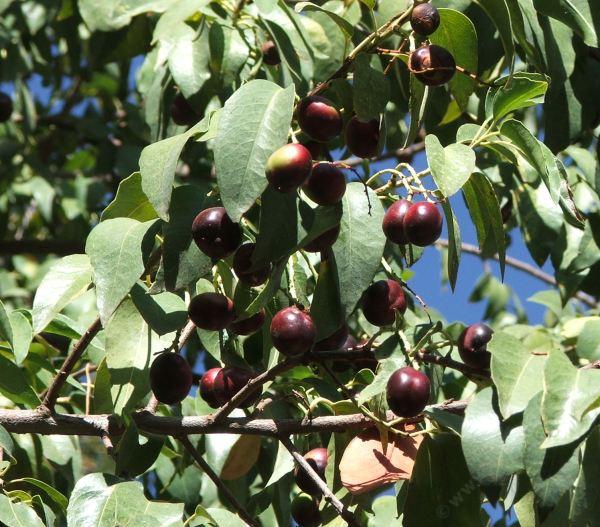
Prunus lyonii, Catalina Cherry

Prunus lyonii, Catalina Cherry: This is not the south american one that is recommended by John

Catalina Cherry, Prunus Lyonii

 "Catalina Cherry, Prunus lyonii, is a narrow evergreen tree to 30 ft native to the Channel Islands. It has white flowers in spikes in April-May. It has large black edible cherries that are all seed and skin. Leaves are a dark glossy green. This evergreen cherry is native to the Channel Islands. The plant likes full sun. This tree works great for blocking neighbors, where there isn't a whole lot of space. (Synonym Prunus integrifolia) A note : Our stock is grown from seed of plants on the mainland so may be contaminated with P. ilicifolia. So plants are great for the garden but not for restoration in their original island habitat."


'via Blog this'