We are your neighborhood farmer

We are your neighborhood farmers -- Get in touch at 707 347-9465 or wmorgenthaler@gmail.com
Showing posts with label groundcover. Show all posts

Thursday, February 22, 2018

Lysimachia nummularia - Creeping Jenny Perennial

Plant Profile for Lysimachia nummularia - Creeping Jenny Perennial: shaddy areas perhaps at pond edges Ther is a golden version that is good for full sun

Lysimachia nummularia

"Creeping Jenny is a vigorous, spreading groundcover plant that can be very useful in moist, shady situations. Plants form a low mat of bright green rounded leaves, bearing bright golden-yellow flowers from late spring into the summer. Excellent in pots and tubs, or cascading over walls. Too vigorous for the rock garden. Since the stems root into the ground wherever they touch, this plant is easily increased by simply moving new plantlets in spring or fall. Best as a lawn substitute, otherwise this can escape into lawns or borders. Semi-evergreen in mild winter regions."


'via Blog this'

Thursday, February 1, 2018

Clematis armandii at San Marcos Growers

Clematis armandii at San Marcos Growers:

Related image

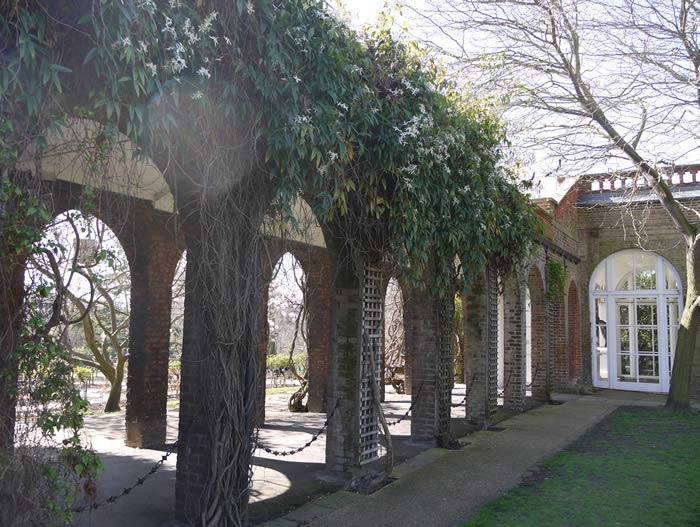
 "Clematis armandii (Evergreen Clematis) - This vigorous evergreen vine climbs to 15 feet and as wide using tendrils and is densely covered with pendulous compound leaves with 3 long lance-shaped leaflets that are up to 5 inches long and a bronze color when first emerging, then turning a glossy dark green with age. In late winter to early spring appear the clusters of fragrant 2 1/2 inch wide white flowers on the previous year's growth. Plant in sun or light shade with moderate water - shade is a must in hotter inland gardens but on the coast it tolerates deep shade but blooms best with bright light or full sun. It is hardy to around 10 degrees F (and some claim it can be grown in USDA Zone 6a to -10 °F). It is susceptible to leaf burn if water quality is poor. Best if pruned right after flowering to clear out dead foliage and to control growth. With its several annual growth flushes, even after pruning it will rapidly rebound to create a dense cover and grow new flowering stems for the following year. It provides a wonderful texture in the garden and makes a great screening plant that is attractive in our out of bloom. It is reported to be resistant to deer predation with flowers attractive to bees, butterflies and birds. Evergreen Clematis naturally inhabits forests, forest margins and riparian areas from just over 300 feet to nearly 8,000 feet in elevation in central to southern China and northern Myanmar. The genus name is from Ancient Greek 'clématis' which was the name for a climbing plant and may have as a root the Greek word 'klema' which means "a twig" or "a branch". The specific epithet given this plant in 1885 by the French botanist Adrien René Franchet honors the French Missionary botanist Père Armand David (1826-1900) who first collected the type specimen. This vine was first introduced into cultivation in England in 1900 and in the US in 1934 by the Bureau of Plant Introductions (USDA). We have been growing this great plant since 1982.  This description is based on research and observations made of this plant as it grows in our nursery, in our nursery garden and in other gardens that we have visited. We also try to incorporate comments received from others and appreciate getting feedback of any kind from those who have any additional information about this plant, particularly if they disagree with what we have written or if they have additional cultural tips that would aid others in growing Clematis armandii."


'via Blog this'

Ceanothus griseus horizontalis

Ceanothus griseus horizontalis | Mostly Natives Nursery:

Image result for carmel creeper

 "Carmel Creeper Ceanothus
A good looking ground cover Ceanothus with large clean, glossy leaves. Shorter than Ceanothus 'Yankee Point' this shrub grows eventually 1 to 3 feet tall, 15 foot spread or trailing. Medium blue flowers in spring, grow in sun or light shade. Quite drought tolerant but one of the least deer resistant of the Ceanothus. Bay Area native."


'via Blog this'

Monday, January 29, 2018

Sage, Salvia 'allen chickering"

From O'Donnells Fairfax nursery replaces bees bliss with this.

Selected for its vigorous growth, grey-green leaves, and large lavender blue flowers, 'Allen Chickering' quickly reaches 5' tall and wide, often in its first year. A dry, sunny well drained spot is ideal, although it will take clay if there is a slope and it is not overwatered. Excellent plant to attract bees and hummingbirds, also good for erosion control. A hard pruning (at least 1/3) in late summer will produce a nicer looking, longer lived plant. 5x5 size

Image result for Salvia 'allen chickering

Bee's Bliss Sage, Salvia X 'Bee's Bliss'
Plant this under manzinita Salvia Bee's Bliss is an excellent ground cover and habitat plant. It grows around 2 feet high and 6 to 8 feet wide. The leaves are grey-green with lavender flowers in the spring. It is drought tolerant after it is established but is tolerant of a wide range of garden conditions. Hummingbirds and bees are attracted to the flowers.

Bee's Bliss Sage, Salvia X 'Bee's Bliss':


'via Blog this'