We are your neighborhood farmer

We are your neighborhood farmers -- Get in touch at 707 347-9465 or wmorgenthaler@gmail.com

Thursday, February 1, 2018

Ray Hartman Ceanothus, Ceanothus Ray Hartman

Ray Hartman Ceanothus, Ceanothus Ray Hartman:


"Ray Hartman Ceanothus is a cultivated hybrid of Ceanothus arboreus and Ceanothus griseus. It originated by chance in 1929 at the Leonard Coates Nurseries in Morgan Hill, CA, and is now widely grown in nurseries throughout California. It has dark green glossy leaves, and grows quickly up to 15 feet in height and 10 feet in width. Its blue flowers range from powder blue to dark blue.

Ray Hartman Ceanothus is one of the easiest to grow of all the Ceanothus cultivars in California. In general, it's best to grow Ceanothus species native to your area. Ray Hartman Ceanothus may be the exception that proves the rule. While its parents are native to the channel islands and the coast of north-central california, it grows reliably throughout the state in both coastal and interior areas, as long as temperatures stay above 10-15 degrees, It tolerates fairly dry soil and naturalizes well in areas with just a little more than average soil moisture during the dry season, such as slope bottoms and north facing slopes. It also tolerates supplemental irrigation up to once per week, though still better not to water directly during the summer or early fall once established or it'll likely have a shortened life. It will get all the water it needs as it stretches it's roots out to nearby irrigated areas."


'via Blog this'

Giant Chain Fern, Woodwardia fimbriata

Giant Chain Fern, Woodwardia fimbriata:


 "Woodwardia fimbriata is a species of fern known by the common name giant chain fern. It is native to the forests of the west coast of North America, and is the largest fern in North America. It has very long fronds, each reaching up to 8 feet in length. Its sori are short but broad and are arranged in neat lines, the characteristic that gives the chain ferns their name. The chain shape is visible on both surface and underside of each leaflet. It can be either evergreen or summer deciduous depending on its growing conditions."


'via Blog this'

Bigflower Tellima, Tellima grandiflora

Bigflower Tellima, Tellima grandiflora:

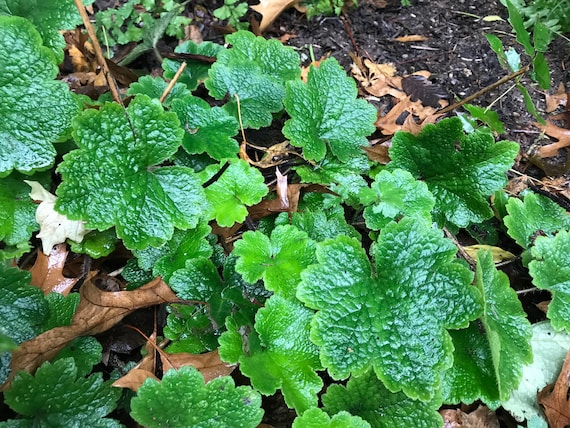
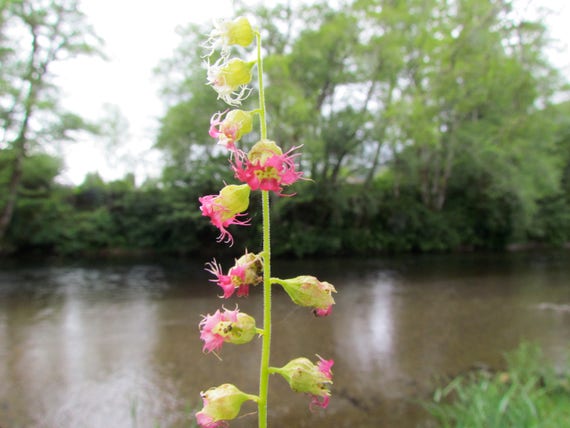
 bigflower Tellima (Tellima grandiflora) is a native perennial herb in the Saxifagiaceae (Saxifrage) family that grows in central and northern California, from Santa Cruz northward. It is found in the Coast Ranges and northern Sierras. It tends to grow in the moist shade of evergreen forest at elevations from sea level to 5,000 feet. The basal leaves resemble Heuchera and other plants in the same family. The leaves and inflorescence are somewhat hairy. The spike-like raceme carries numerous red, pink or white flowers that are small and ephemeral but very attractive. It would be a good addition to the understory of a woodland garden."

This is good for the wet zone by the pond
'via Blog this'

big flower

Pacific Rhododendron, Rhododendron macrophyllum

Pacific Rhododendron, Rhododendron macrophyllum:

Previous Image

 "Pacific Rhododendron, Coast Rhododendron or Big Leaf Rhododendron is a broadleaf evergreen Rhododendron species native to western North America. Pacific rhododendron is found along the Pacific Coast from British Columbia to Monterey County in California. It is widely distributed in the Coast and Cascade Mountain Ranges. Pacific rhododendron is less abundant in the Coastal Mountains of Washington and northern Oregon and more common south of the Siuslaw River."


'via Blog this'

Water lily Nuphar polysepala

Nuphar polysepala - Wikipedia:

This is a native and a food and medicinal plant but is unavailable at my sources

Previous Image

 "Nuphar polysepala (the great yellow pond-lily or wokas;[1] syn. Nuphar polysepalum orth. err., Nuphar lutea subsp. polysepala (Engelm.) E.O.Beal) is a species of Nuphar native to western North America.[2][3] The name Nuphar is Greek for "water-lily" and polysepala means many sepals. It is commonly found in shallow muddy ponds from northern Alaska and Yukon southward to central California and northern New Mexico, and can be recognized easily by its large floating leaves and
bright yellow blossoms."

Nuphar polysepala (the great yellow pond-lily or wokas; syn. Nuphar polysepalum orth. err. , Nuphar lutea subsp. polysepala (Engelm. ) E. O. Beal) is a species of Nuphar native to western North America. The name Nuphar is Greek for "water-lily" and polysepala means many sepals. It is commonly found in shallow muddy ponds from northern Alaska and Yukon southward to central California and northern New Mexico, and can be recognized easily by its large floating leaves and bright yellow blossoms. It reproduces by both seed and rhizome. The rhizomes are underground stems that are thick and fleshy. These rhizomes are hard to pry since they are submerged in mud and are difficult to dig. The leaves float on the water surface, and have an external waxy coating which makes the leaf waterproof and thus allows the leaf stomata to breathe freely; they are glossy green, oval, 10-45 cm long and 7-30 cm wide, with a notch at one side to the leaf stem. The leaves provide shelter for fish. The rhizomes (underground stems) are round and submerged in mud. Flowers and fruit. The flowers are 5-10 cm diameter, and have 6 to 12 (most often 9) bright yellow petal-like sepals; the true petals are small, hidden near the stamens. Inside the flower from top view anthers can be seen as red and true petals are wedge-shaped and are hidden by the stamens. The fruit is a ovoid green to yellowish capsule 4-6 cm (rarely 9 cm) long 3. 5-6 cm wide. They were a significant source of carbohydrates for the Klamath and Modoc peoples who inhabited the area near Oregon's Upper Klamath Lake. Medicinal. Leaves and rootstocks have been used for ulcerous skin conditions and swelling. The rootstock infusion is used as a traditional gargle for mouth, sore throats and douche for vaginal inflammation. The rootstock is prepared from two tablespoon chopped rhizome with one cup boiling water .

http://calscape.org/Nuphar-polysepala-()

'via Blog this'

Prunus lyonii, Catalina Cherry

Prunus lyonii, Catalina Cherry: This is not the south american one that is recommended by John

Catalina Cherry, Prunus Lyonii

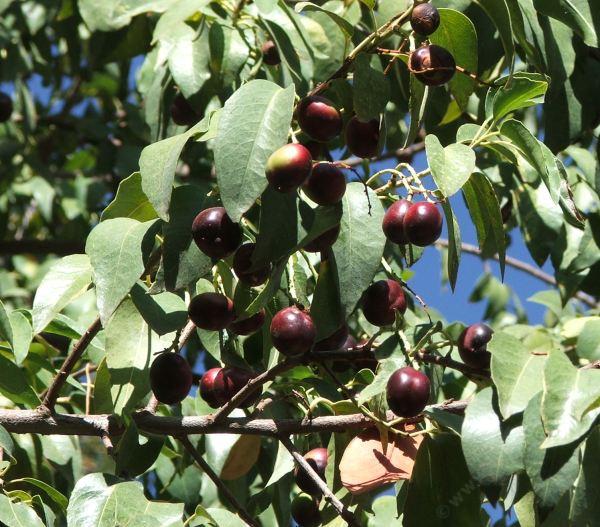
 "Catalina Cherry, Prunus lyonii, is a narrow evergreen tree to 30 ft native to the Channel Islands. It has white flowers in spikes in April-May. It has large black edible cherries that are all seed and skin. Leaves are a dark glossy green. This evergreen cherry is native to the Channel Islands. The plant likes full sun. This tree works great for blocking neighbors, where there isn't a whole lot of space. (Synonym Prunus integrifolia) A note : Our stock is grown from seed of plants on the mainland so may be contaminated with P. ilicifolia. So plants are great for the garden but not for restoration in their original island habitat."


'via Blog this'

Wisteria frutescens - Plant Finder

Wisteria frutescens - Plant Finder:

Image result for Wisteria frutescen

 "Best grown in slightly acidic, humusy, moderately fertile, moist, well-drained soils in full sun. Full sun is needed for best flowering. Although vines may produce flowers by the second or third year after planting, first flowering may take longer. Vines need regular pruning(s) in order to control size and shape of the plant and to encourage flowering. Consult a pruning guide for specifics on the initial training of vines and the types of pruning that can or should be done for these plants. An application of fertilizer in early spring can also help stimulate flowering. Choose growing sites wisely because plants dislike being transplanted.

Noteworthy Characteristics
Wisteria frutescens, commonly called American wisteria, is a counterclockwise twining deciduous woody vine that grows to 40’ or more. It is native primarily to moist thickets, swampy woods, pond peripheries and stream borders from Virginia to Illinois south to Florida and Texas. In Missouri, Wisteria frutescens var. macrostachya is found in the far southeastern bootheel area. Fragrant, pea-like, lilac-purple flowers in drooping racemes to 6” long bloom in April-May after the leaves emerge but before they fully develop. Limited additional summer bloom may occur. Flowers give way to narrow, flattened, smooth seed pods (to 5” long) which ripen in summer. Pods typically split open in fall. Compound, odd-pinnate leaves (each leaf typically with 9-15 lance-shaped leaflets) are deep green. American wisteria is not as aggressive a spreader as Wisteria sinensis (Chinese wisteria). Both Wisteria frutescens (American wisteria) and Wisteria sinensis (Chinese wisteria) twine in a counterclockwise direction but Wisteria floribunda (Japanese wisteria) twines clockwise.

Genus name honors Caspar Wistar (1761-1818), professor of anatomy at the University of Pennsylvania.

Specific epithet means shrubby or woody.

Problems
Although susceptible to a number of foliage-chewing insects and fungal diseases, none are significant. Failure of vines to produce flowers may be attributable to a number of causes including death of flower buds in winter, too much shade, plants too young (especially seed grown ones), improper pruning or overfertilization."


'via Blog this'

Clematis armandii at San Marcos Growers

Clematis armandii at San Marcos Growers:

Related image

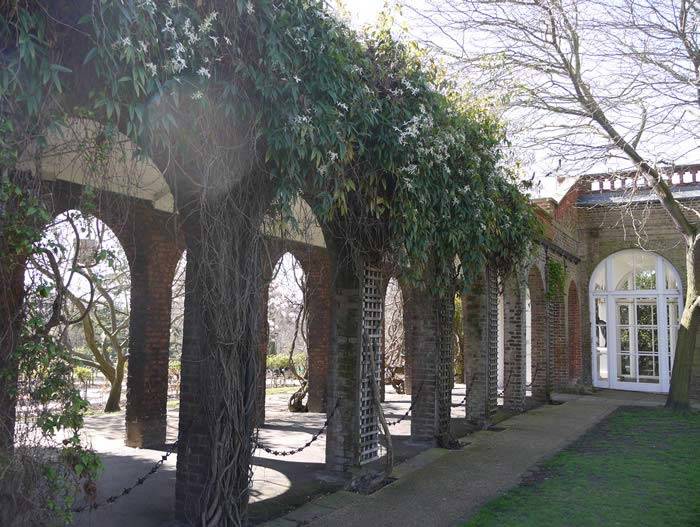
 "Clematis armandii (Evergreen Clematis) - This vigorous evergreen vine climbs to 15 feet and as wide using tendrils and is densely covered with pendulous compound leaves with 3 long lance-shaped leaflets that are up to 5 inches long and a bronze color when first emerging, then turning a glossy dark green with age. In late winter to early spring appear the clusters of fragrant 2 1/2 inch wide white flowers on the previous year's growth. Plant in sun or light shade with moderate water - shade is a must in hotter inland gardens but on the coast it tolerates deep shade but blooms best with bright light or full sun. It is hardy to around 10 degrees F (and some claim it can be grown in USDA Zone 6a to -10 °F). It is susceptible to leaf burn if water quality is poor. Best if pruned right after flowering to clear out dead foliage and to control growth. With its several annual growth flushes, even after pruning it will rapidly rebound to create a dense cover and grow new flowering stems for the following year. It provides a wonderful texture in the garden and makes a great screening plant that is attractive in our out of bloom. It is reported to be resistant to deer predation with flowers attractive to bees, butterflies and birds. Evergreen Clematis naturally inhabits forests, forest margins and riparian areas from just over 300 feet to nearly 8,000 feet in elevation in central to southern China and northern Myanmar. The genus name is from Ancient Greek 'clématis' which was the name for a climbing plant and may have as a root the Greek word 'klema' which means "a twig" or "a branch". The specific epithet given this plant in 1885 by the French botanist Adrien René Franchet honors the French Missionary botanist Père Armand David (1826-1900) who first collected the type specimen. This vine was first introduced into cultivation in England in 1900 and in the US in 1934 by the Bureau of Plant Introductions (USDA). We have been growing this great plant since 1982.  This description is based on research and observations made of this plant as it grows in our nursery, in our nursery garden and in other gardens that we have visited. We also try to incorporate comments received from others and appreciate getting feedback of any kind from those who have any additional information about this plant, particularly if they disagree with what we have written or if they have additional cultural tips that would aid others in growing Clematis armandii."


'via Blog this'

Thornless Honeylocust Tree

Thornless Honeylocust Tree on the Tree Guide at arborday.org:

Related image

It is very fast and is considered invasive by farmers in much of the county and clogs waterholes with thickets harboring vermin and preventing grazing animals from drinking....hmmm sounds perfect as part of a hedgerow.  However it is a full sun tree.

"The thornless honeylocust has captured the hearts of arborists, community foresters and homeowners throughout America. And no wonder. This tree is easy to plant, grows fast, has reasonably strong branches, is aesthetically pleasing and is tough enough to withstand just about any urban setting.

In nature it grows in both a thorned and thornless form, with thorns growing up to 12" long. Many regions in the South once referred to honelocusts as Confederate pin trees because those thorns were used to pin uniforms together during the Civil War."

(This was nixed by urban tree farm it get a pest that kills tree by age 10ish)


'via Blog this'

Ceanothus griseus horizontalis

Ceanothus griseus horizontalis | Mostly Natives Nursery:

Image result for carmel creeper

 "Carmel Creeper Ceanothus
A good looking ground cover Ceanothus with large clean, glossy leaves. Shorter than Ceanothus 'Yankee Point' this shrub grows eventually 1 to 3 feet tall, 15 foot spread or trailing. Medium blue flowers in spring, grow in sun or light shade. Quite drought tolerant but one of the least deer resistant of the Ceanothus. Bay Area native."


'via Blog this'