Every first and third Thursday of the month we have been cooking and serving farm to table dinners in the neighborhood near Santa Rosa's main shelter. Just this Monday, the City cited the family that hosts of these dinners for the crime of helping the unsheltered. The article and letter campaign supporting them is in this Action Network Post. Please read and share this with your networks. and come and support us in person if you can.
Save The Date, Climate Mobilization Project is Going National Thurs. 9/25 5:30
The system that brought us here is a sinking ship. Nobody's going to jump till we've got the lifeboats ready.
Climate Mobilization Project's goal is immediate and reachable now -- Train 15 to 20 new leaders from communities around the country, and support them in organizing around real survival needs like clean water, meaningful work, food, mutual aid, defending vulnerable groups from right wing assaults and building robust community connections.
Together we will start building these lifeboats now – by supporting Climate Mobilization Project and exploring what this looks like in our own community.
Many on this invitation list, although worried about the future in this world gone mad, might feel pretty secure in their own ability to survive and weather the storm. Young leaders from communities on the front lines of the climate crisis need immediate options – new institutions that support their human needs. The societal breakdown we are experiencing is also an opportunity. These new institutions are ours to build. The future is ours to create!
We are developing & remodeling large 10 - 12 bedroom houses to rent with possible equity sharing to committed co-living groups. Houses will be located in walkable, bike-able urban cores, typically include an auxiliary structure for bikes and crafts & are big enough for 10 to 18 people who choose to share & live together in harmony. This redefined social housing will provide desirable social benefits & economic stability & may be structured as a permanent realestate trust to remove it from the speculative market. Our Southwest Portland property has been acquired & we are actively seeking a group to participate in the remodeling design process prior to occupancy as early as April 2024
This collaboration started with members of our local DSA in April of 2020 just as the Covid-19 lockdown began. Our Mutual Aid Gardeners plant, grow and tend a quarter acre and produce 20-40 CSA boxes of food weekly year-round for themselves, families and comrades. Our slogan is Free Food For All.
The project matches perfectly Oasis Farm's goal for social change of creating and sharing abundance equitably. We are entering our fourth year in 2023.
Free to everyone but donations welcome to support our mutual aid garden project. We currently are serving 40 families, providing weekly boxes with all volunteers but wish to grow. Call 707 347-9465
This I clipped from another blog but it is useful.
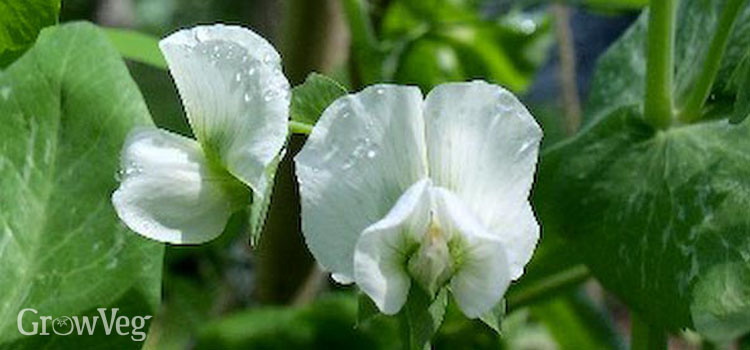
Garden peas including shell, snow and snap peas have two characteristics that make them strong candidates for super-productive planting plans. First, peas vine upward, and their vertical posture makes it possible to plant a low-growing crop at their base. Second, in most climates spring-planted peas finish producing in midsummer, leaving a nice chunk of growing season left for growing another major vegetable after peas. Whether you are talking intercropping (planting multiple vegetables in shared space) or succession planting (following one vegetable with another in the same season), garden peas provide plenty of creative opportunities.
Each year I grow all three types of pea (snow peas, snap peas and shell peas) though the shell peas never make it into the kitchen because we eat them in the garden. This makes it even more important to maximize the space we give to peas. Snap peas are the most productive type because of their plump pods. In a good year, we freeze enough snap peas to last until spring.
Interplanting With Peas
All garden peas, including short varieties, need some type of support. Your trellising opportunities are endless, because peas will use their strong tendrils to cling to almost any support. Your trellis design has substantial bearing on any interplanting plan. If you have an upright trellis down the center of a bed, the available interplanting space is on the outside of the peas. The two simple pea planting plans (at right, top beds) show how you might do this with leafy greens like lettuce, arugula or spinach, or with shallow-rooted radishes and green onions. I like the greens option best because leafy greens shade the pea roots and help keep them cool. To keep from disturbing the pea roots, I harvest these salad greens by cutting them rather than by pulling up the plants.
Peas will climb almost any supports
The plan changes if you plant peas in widely spaced rows, and provide a slanted diagonal trellis. This creates a sheltered spot down the middle of the row, which can be planted with onions or potatoes (see above illustration, bottom two beds). In climates where mild spring weather never lasts long enough, this is an excellent way to get a nice summer crop of new potatoes despite the early onset of hot weather.
Succession Planting with Peas
It's natural to want to wait for pea plants to produce every last pea, but you will need a more ruthless attitude to terminate your peas to make room for a new crop. Many gardeners (including me) like to follow peas with cucumbers or squash, which can make use of the trellis erected for the peas. There is no need to pull up the peas - simply snip them off at the soil line. Any unused nitrogen nodules on the pea roots will be in position to help nurture the next crop.
Several gardeners I know conduct covert operations in their pea patches by snipping out individual pea plants and slipping in cucumber or squash seedlings while the remaining peas are still growing. How do you know when to mobilize with a succession crop? Regardless of their type and size, peas eventually run out of steam, which is apparent when the new pods form at the stem tips rather than on side branches. Pod set in peas always proceeds in a predictable sequence from the bottom of the plant to the top. When only pods at the stems' topmost tips remain, it's time for a change.
If you do stage a complete renovation of the pea bed (unavoidable when interplanting with potatoes), consider carrots as your succession crop. A good friend who is also one of the best vegetable gardeners I know highly recommends this succession. In climates with long and lovely autumns, you may be able to grow broccoli after peas, too. Please share what works for you in your garden, because few of us ever get enough garden peas.
Our agrifood system is responsible for up to 37% of all greenhouse gas emissions and is a major factor in biodiversity loss. Can we feed ourselves without devastating impacts on the planet’s life support systems?
Chaired by Dr Jordan Raine (Former Environment Editor at The Conversation, XR Scientist), with a panel of international experts including:
Dr Marco Bertaglia, Scientific Officer in Agroecology, Joint Research Centre, Italy (on sabbatical) and XR Scientist
Dr Lynn Dicks, Ecology Lecturer, Department of Zoology, University of Cambridge
Jyoti Fernandes, Policy lead Land Workers Alliance UK, European Coordination Via Campesina
Prof Alain Peeters, Secretary of Agroecology Europe
The apple guild is in another location and may be combined here later
For those who aren’t familiar a fruit tree guild is a permaculture method of planting a fruit tree in combination with other plants that will grow together to create a mini ecosystem around the tree. While there hasn’t been a lot of scientific study of tree guilds they do show a lot of potential. Research has shown that intercropping (planting more than one species together) can be a valuable tool for increasing yields and crop health. Plus, tree guilds, in stark contrast with monoculture orchards are space saving and great for wildlife.
Selecting Plants
The first step is to research the type of tree you’d like to start with. For an example I’ll be talking about a peach tree guild but you can use any type of tree whether it’s an existing tree on your property or one you’d like to plant this spring. The important part is that you do some research into the tree such as its growth pattern and mature size. Also consider what soil types it prefers, where you’ll be planting it, and if it’s prone to any disease or pest problems.
Based on your research you’ll select companion plants. Tree guilds are typically made up of six categories: suppressors, attractors, repellers, mulchers, accumulators, and fixers though there are variations and there’s no rule that you have to plant all of these or can’t plant more than one species from each category. If you see a need you can even make up your own category!
If you’re planting a particularly tall tree or working with a mature tree you can include perennial shrubs on your plant list. Just be careful with smaller, newer trees that they don’t compete for light.
Suppressors
These are plants that suppress weed growth through there own growth habits. Good examples include vining winter squash which shades out weeds, mint or buckwheat which outcompete weeds through rapid, thick growth, or strawberries, pennyroyal, or thyme whose vines form a thick mat of ground cover. For a peach tree guild I would choose strawberries partially because I enjoy eating them but also because they’re an excellent suppressor and their early flowers draw in pollinators.
Attractors
Mona’s Orange Cosmos
Attractors are plants that attract pollinators and other beneficial insect to the tree. Examples include yarrow, buckwheat, butterfly weed, and mustards. Many other species can also be used but it’s important to find something that will work well for your chosen tree. For a peach tree guild I would choose to plant cosmos as they attract trichogramma wasps which are a helpful beneficial insect and a natural enemy of oriental fruit moths which can severely damage peach trees.
Repellers
These plants job is to repel unwanted pests from feeding on your fruit tree. Lemon grass, marigolds, lemon balm, and almost any allium like garlic, chives, or perennial onions are all commonly used to repel pests. Knowing your specific tree’s common pest issues will allow you to best select a variety. For the peach tree example I’d use garlic as there’s some evidence that planting garlic around peach trees helps repel peach tree borers.
Fixers
Red Clover
Fixers refers to plants that are nitrogen fixing meaning that they add nitrogen to the soil as they grow. Great examples of these plants include white clover, red clover, beans, alfalfa, lupine, and peas. For a peach tree guild I would choose red clover. It attracts pollinators, beneficial insects including trichogramma wasps, and makes a wonderful tea.
Mulchers
Probably the most commonly used mulcher plant in permaculture designs is comfrey. It’s hardy, perennial, easy to care for, and its leaves do in fact make excellent mulch. Hostas have the same benefits. You can also use annual cover crops like buckwheat that winter kill and provide good mulch. Buckwheat also has the added benefit of self seeding. For this example comfrey will be used because it doubles as an accumulator.
Accumulators
These are plants that “mine” nutrients from deep in the soil and bring the to the surface where other plants will be able to access them. Good examples include alfalfa, comfrey, borage, and chicory. For more ideas look at deep rooted perennial plants. For my peach tree guild I would opt for chicory as it offers medicinal benefits for both humans and livestock.
Once you’ve got all your plants you can begin planting. Obviously it’s easiest to start with the tree and work your way out. You should consider how much space it will need and shade it will create as it grows when selecting locations for other perennials.
Utilizing this permaculture method can help you make the most out of your orchard space by incorporating other edible, medicinal, or flowering crops into your design and keeping your trees healthy and productive. It can also make your space more habitable for beneficial wildlife like birds, pollinators, and beneficial insects which lose habitat when space between trees is mowed. Lastly it may even help reduce erosion when compared to traditional orchard set ups. What’s there to lose?
Events and activities on this calendar are only available to members of the cooperative. No drop-ins please. Contact Wayne at (707) 347-9465 if you are interested in joining and I will bring the question to the group when we meet next. Please be patient.
This is a thought experiment on fire inspired by the Kincade fire, discussions with poet laureate Maya Khosla and a trip we just took to Ettawa Springs a charming yet disheveled turn of the century resort in the forested hills near Loch Lomond in Lake County.
Imagine a new day for life on earth -- Living in communitywith many thousands on ten thousand acres of forest and wilderness land. Over time and generations we would restore and grow and tend and improve habitat, sinking carbon and then the fire comes -- inevitable -- all your compassionate work thought lost.
If your village were nomadic you would move on, or perhaps if you were a caretaker society of the future you would set in motion restoration of the burn, hastening its regeneration using technologies and infrastructure and propagation, and then let wilding take its course. Your work, done for the moment.
Life in your village, if your structures were hardened and survived the fire would be a shadow of what it was, transformed by fire, dwellers having completely different purpose and its culture transformedin relationship to the land -- but burn it will, burn it must, again and again over eons. We would live and return to the landscape for ages, as caretakers, and carry that knowledge of fire in our bones, ancient memories we pass to our children in stories. Nature knows the way and fire will always be part of nature.
There is of course a dominate and modern story. Private property estates on the hill and resorts in wild lands and private mansions nestled in tracts of wilderness with vineyard and affluence. As picturesque as these modern stories may be, they are out of step with the original human in nature story. I do not think they can ever be reconciled with fire, try as they will.
PG&E is a criminal syndicate run amok in this modern story, but they did not make this story. So although we must hold them to account for their crimes, this will not repair our modern story and our relationship to fire. It will just be a lawnmower next time.
This is two years old and yet very relevant. Anthony Bourdain, and other celebrity chefs, help solve the problem of food waste and hunger as one-third of all food grown for human consumption ends up in the garbage. Herein lay answers to the global food crisis that on its way whether we like it or not. Although governments are doing absolutely nothing at scale to fend off this disaster this film has good answers to the problem -- deliciously.
I do not have a youtube link this time but rather a link to the CBS (Canadian Public Broadcast) channel that runs the show. Good luck may need cookies.
I am not a smoker but not a teetotaler, so here's the article. It is interesting to note that Wendell Berry was a tobacco farmer as his family before him and believed deeply in sustainability and the nobility of good old fashioned values held by small family farmers. This article chronicles the demise of these farmer.
You might be surprised to learn that well into the 1990s, tobacco production was a hidden hold out of profitable small-scale family operated agriculture, especially in Appalachia and the Piedmont plateau. In 1987, the average tobacco farm was just 4.6 acres, and run mostly with family labor.
That of course changed with our state policy mantra of "Get Big or Get Out."
I am very excited with this event. It brings me back to my roots when at Jungle Vibes Toys we did arts and crafts for kids on the riverside deck. I will be personally staffing a booth making paper kaleidoscopes, yarn craft and leaf prints. All the paints and supplies are provided. Kids can make art cards and gifts for the holidays. So sweet....and I don't have to tell you how sweet and talented are the crew of Butterfly Ship
The science here is funded by Gates so OK I guess and it will ultimate involve Genetic engineering. I am not of the persuasion to think GMO baaaaad! I just think it's science. Commercializing it and releasing it on the world helter skelter has turned out bad of course. Herein lies my caution. Gate is all about increasing yield in crops in a system that has already proven to be unsustainable because of depletion of soils
As human population growth fuels the need for increased crop yields, researchers look to engineer plants that perform photosynthesis more efficiently
If you go to the link for the article that crop they are standing amid appears to be tobacco. Hum, there's money in it but I am not sure the planet need increased yields of that particular vegetable.
Of course, plant researchers have been thinking about using improved photosynthesis to increase crop yields for decades, but recent leaps in computer modelling and genetic engineering techniques have started to bring that goal within reach. In 2011, and again in 2015, a group of scientists came together to publish an article that called for research into the improvement of photosynthesis as a means for meeting the increased yield demands of coming decades, as well as laying out potential strategies. One of the strategies the group highlighted was the possibility of engineering plants to use near infrared light.
While this tech could be used to allow inter cropping food crops under canopies which certainly has promise if it can be done safely, its primary use will be in field crops to get the immediate short term gain in yield while continuing other destructive practises.
Re-engineering shade loving plants to efficiently photosynthesize under canopies of trees in deep layers could turn the forests into carbon sucking monsters which of course would accelerate drawdown and thus be of good use, this may not be the ultimate planet we want. I can imagine a kind of sci-fi out of control jungle and I kind of like the one we have so how do we contain the genetics so that it can be normalized in the future. Also who will live in these new carbon sucking forests? It is not a niche that has yet been adapted to so you would expect die offs and unwitting population explosions to happen. Hum, I think it should stay as science until understood better.
This undark site is really cool on their about us it explains the name --
EDITORIAL MISSION
The name Undark arises from a murky, century-old mingling of science and commerce — one that resulted in a radium-based industrial and consumer product, called Undark, that was both awe-inspiring and, as scientists would only later prove, toxic and deadly. We appropriate the name as a signal to readers that our magazine will explore science not just as a “gee-whiz” phenomenon, but as a frequently wondrous, sometimes contentious, and occasionally troubling byproduct of human culture.
As such, the intersection of science and society — the place where science is articulated in our politics and our economics; or where it is made potent and real in our everyday lives — is a fundamental part of our mission at Undark. As journalists, we recognize that science can often be politically, economically and ethically fraught, even as it captures the imagination and showcases the astonishing scope of human endeavor. Undark will therefore aim to explore science in both light and shadow, and to bring that exploration to a broad, international audience.
Undark is not interested in “science communication” or related euphemisms, but in true journalistic coverage of the sciences.
FUNDING
Undark is a non-profit, editorially independent digital magazine exploring the intersection of science and society. It is published with generous funding from the John S. and James L. Knight Foundation, through its Knight Science Journalism Fellowship Program in Cambridge, Massachusetts.
This is the information on the project in Wales that I first came upon in a youtube about the Lamis ecovillage project. I am proposing that little ecosettlments could be proposed in otherwise protected land such as riparian and other important watershed areas in this county that are the current responsibility of various water and conservation agencies and that by putting people in the landscape in this way we can advance sustainability goals, hasten regeneration while providing protection for habitat.
My proposal would additionally provide livelihood, shelter and food. While the structures and infrastructure constructed would be un-permitted and low impact the overall project would nonetheless be self-monitored using science based tools and reviewed by agencies to insure that the plan is working to provide a positive contribution, extremely low inputs and substantially according to plan.
The following excerp from transcript of that video
Welsh Assembly is one of the few governments in the world to have made a legal commitment to sustainability. As a result of this commitment Pembrokeshire County Council adopted something called policy fifty-two in 2006 which was intended to provide for eco small holdings in previously protected open countryside on the basis that they make a positive environmental social and economic contribution.
Paul initially formulated his proposals for the land mass project in direct response to this policy but still the council didn't make his life easy. Three years two rejections and thousands of planning application papers later the lamis project was given the green light in the summer of 2009. The opportunity that we are celebrating here at lamis is now available across the whole of Wales because the the Welsh Assembly government see that actually the way forwards in terms of sustainability to get people back onto the landscape working the land in that way the landscape becomes more productive the landscape becomes more diverse and we can take more carbon out of the atmosphere
This is a PDF guide from the Pembrokeshire County Council that helps applicants apply for this. This is a very useful 19 page read that covers many of the questions that may come up in discussions with policy makers. It is true that Wales is a much more rural culture than California and to some degree issues like defining livelihood and economic contribution my be incongruent with levels accepted in Wales owing largely to our absurd economy and lifestyles. This will no doubt have to be addressed.
This is a link to a planning software that Pembrokeshire recommends and could be integrated into the reporting of restoration efforts that agencies would like to see. With a tools like this our project would be putting a low tech low impact farmers in the riparian landscape but providing a very sophistocated tech to report out that could provide substancial proof of concept in just 4 or 5 years.
Late last month, the Trump administration cleared the way for chicken plants to increase their processing line speeds from 140 birds per minute to 175 birds per minute. The change deals a blow to workers and reverses the efforts of labor and animal welfare advocates, who fought to halt poultry line speed increases in 2014. It also indicates the administration will likely soon remove line speed limits in hog slaughter and lower workplace injury reporting requirements throughout all sectors of the economy.
“This decision and the ones we expect are coming up is the pattern of the Trump administration to be cutting back on protections for workers and making decisions in favor of corporations rather than working people,” says Joann Lo, Co-Director of the Food Chain Workers Alliance.
The change comes in response to a 2017 petition to the Food Safety and Inspection Service by the National Chicken Council, the lobbying group representing poultry corporations. While FSIS denied the NCC’s request to lift all poultry line speeds, the USDA agency announced in January that they would set criteria by which poultry processors could apply for waivers to increase their line speeds to 175 birds per minute. FSIS released those criteria in February and published their final guidelines and public response to comments on September 28th. The agency is accepting applications for waivers.
Working conditions in poultry processing are already extremely hazardous. According to the Department of Labor, workers in meat processing plants are injured five times more frequently than all other private workers and are nearly twenty times more likely to develop carpal tunnel syndrome. But true injury rates are likely even higher, as studies by the Government Accountability Office suggest that federal data does not capture all meat processing injuries. One reason is that an estimated 28 percent of meat processing workers are foreign-born, and these workers are less likely to report injury or workplace misconduct due to fear of retaliation or deportation.
The original NAFTA was very bad for Mexican corn farmers, putting millions out of business and losing land by the forced import of cheap, subsidized corn from big ag in the United States. Trumps new version of the trade agreement is the next step in the corporate plunder of Mexico and is even worse.
“It makes it easier for the United States to challenge any rule or regulation or process governing biotech crops that it contends are illegal trade barriers,” says Woodall. “It is designed to provide a brand new avenue of attack against regulations … and enshrine Trump’s deregulatory purge into a trade deal that will outlast this administration.”
Over 8,000 years ago farmers in present-day Mexico first domesticated corn from a wild grass, teosinte. Corn holds incredible cultural, economic, and ecological significance in Mexico to this day. Mexico has maintained a vast array of diverse corn species, with 64 recognized strains, called landraces, and over 21,000 regionally adapted varieties. Over two-thirds of Mexican corn farmers still save their own seeds and plant native strains.
This diverse genetic trove is “absolutely critical to modern crop breeding,” says Tim Wise, the Director of Policy Research at the Global Development and Environment Institute at Tufts University. “It’s a critical natural resource for the modern world,” he says. When researchers look for drought-resistant strains or corn that can requires less fertilizer, they turn to Mexico’s native corn gene pool.
Yep, it's all about deregulation. This article posted is by Claire Kelloway from Food & Power who I have featured here many times and is very authoritative. She runs a DC institute started by LEAH DOUGLAS who is also a journalist with an amazing body of work in the area of food, farming and policy. I recommend reading the entire short article and also perusing other topics in there archives at the above links.


 The system that brought us here is a sinking ship. Nobody's going to jump till we've got the lifeboats ready.







Late last month, the Trump administration cleared the way for chicken plants to increase their processing line speeds from 140 birds per minute to 175 birds per minute. The change deals a blow to workers and reverses the efforts of labor and animal welfare advocates, who fought to halt poultry line speed increases in 2014. It also indicates the administration will likely soon remove line speed limits in hog slaughter and lower workplace injury reporting requirements throughout all sectors of the economy.

